

Exit Interviews Often Blame the Wrong Person: What Pharmacists and MSLs Should Know Before Their Next Move
The exit interview told one story. Lunch told a fuller one. In a recent Inc. column, a founder took a departing developer to lunch after the formal exit interview and heard about micromanagement, limited professional development, and work that did not fit. If you have ever given a polite, vague answer on your way out of a pharmacy or medical affairs role, you already know how that happens.
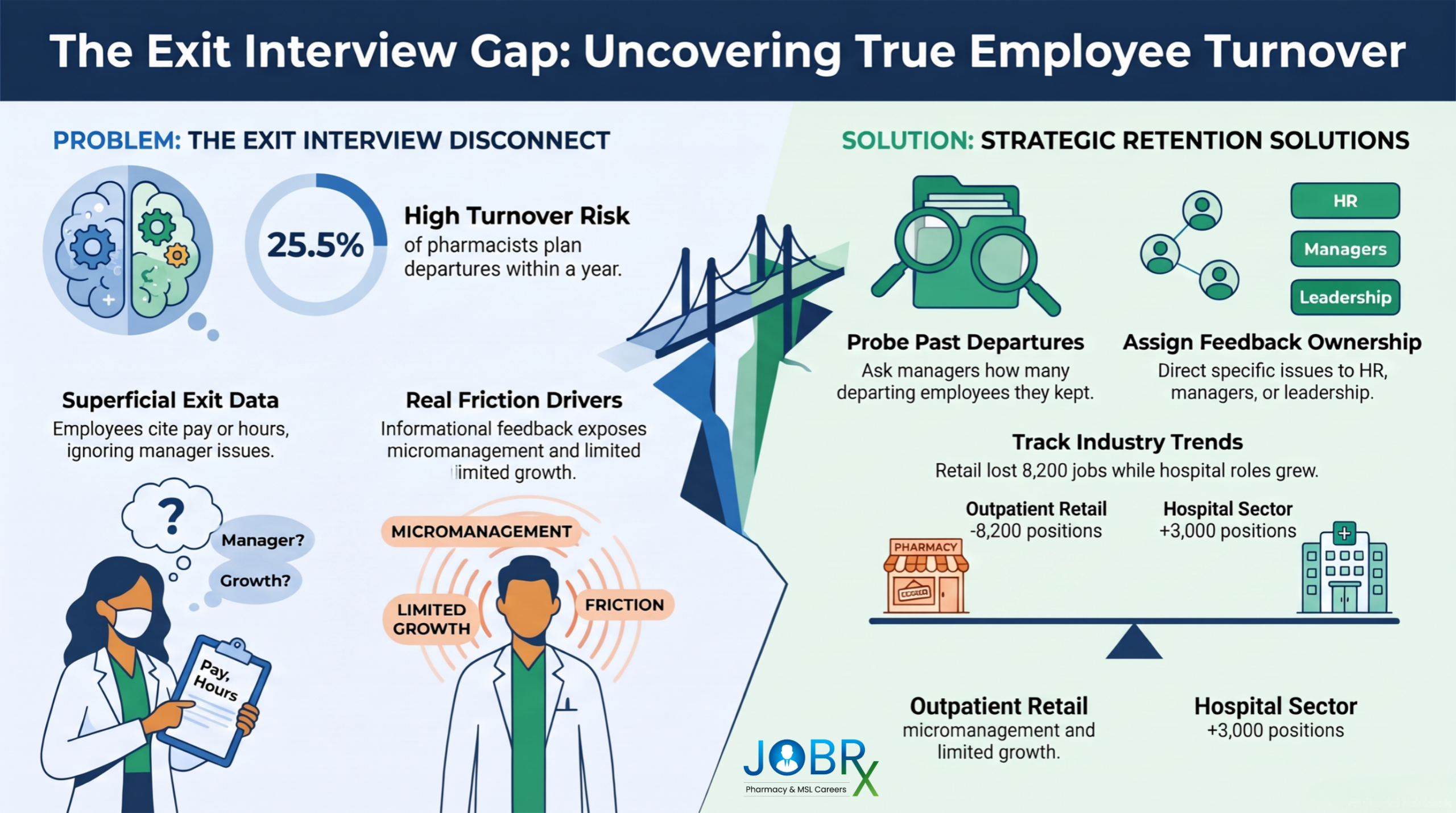
Exit interviews are supposed to explain why people leave. The Inc. column argues they often point at the wrong target, because the departing employee is biased and the data arrives without context. It cites research suggesting leavers readily discuss pay, hours, and workload, but rarely volunteer problems with a manager or coworkers.
That gap carries weight in pharmacy right now. Drug Channels reported on June 23, 2026 that employment in retail outpatient pharmacies fell by 8,200 positions in 2025, while hospitals added 3,000 pharmacist jobs. The 2024 National Pharmacist Workforce Study, fielded in late 2024, found that 25.5 percent of pharmacists were likely or very likely to leave their current job within a year.
MSLs face their own version. A June 2026 perspective in THE MSL Journal, citing emerging benchmarking reports, describes persistent stress among MSLs and MSL leaders, tied to expanding workloads, travel, and administrative burden. When employers read these exits as individual failures, the real cause stays in place and the next hire inherits it.
1. The reason given is not always the reason felt.
After a formal exit interview, the Inc. author took the departing developer to lunch. The lunch notes and the exit survey together pointed to three issues: micromanagement, limited professional development, and work that did not match what the person wanted to learn. The column’s answer is more data. Its first step is a regular review process so exit feedback never stands alone, and its fourth step is collecting input from colleagues to triangulate.
In a pharmacy or field medical team, a leaver may cite “workload” while the real issue is unclear direction from a supervisor. As a candidate, treat a company’s stated turnover reasons as a starting point and ask follow-up questions.
2. Context decides whether an exit was a loss or a relief.
The column’s second step asks whether the company chose to let the person go or wanted to keep them. Some exits correct a poor fit. Others are management and development failures that cost a valued contributor. Ask any hiring manager, “Of the people who left in the past two years, how many did you want to keep?” A leader who answers with specifics is tracking the difference. For job seekers, the answer also reveals whether a team learns from departures or simply replaces the person.
3. Strong leaders bring exit data to the manager.
In the column, the founder and the head of HR reviewed the notes together, then took the micromanagement issue to the manager. The manager acknowledged setting expectations too late and overestimating the employee’s skill level. The company treated the exit as a learning event for both sides. A manager who can hear that feedback and adjust is one worth reporting to. Before you accept a role, ask who reviews departure feedback with your future manager.
4. Feedback needs an owner.
The fifth step splits feedback by who can act on it. A benefits gap goes to HR. Unclear project direction goes to the manager. Burnout is the clearest example of feedback that stalls without an owner. A July 2026 BMC Medical Education survey found burnout among U.S. pharmacy practice faculty higher than in the 2014 report and warned that it could contribute to faculty leaving academic pharmacy within three years. Burnout feedback needs someone who can change workload, not a file that sits in a drawer.
Hospitals now employ 102,000 of the 322,000 practicing pharmacists in the United States, according to Drug Channels, which makes Pharmacy Jobs a growing segment for pharmacists weighing a move from retail. If you are searching Pharmacist Jobs Near Me or Medical Science Liaison Jobs, treat turnover as part of your due diligence. Ask how long people stay on the team, who they report to, and what changed after the last departure. Put the same questions to your medical affairs recruiter.
A clear answer about how a team handles departures shows you are choosing your next role with intention. Candidates who do this homework walk into interviews with sharper questions and better information.
Your next role deserves the same scrutiny an employer should give an exit interview. Before your next offer, write down three questions about turnover and ask them out loud. Listen for specifics, not polish.
Then hit reply and tell us the one question you wish you had asked before your last role. The best career moves start with better questions, and your answer could help the next pharmacist or MSL choose with clear eyes. Share this edition with a colleague who is weighing a move.