

AI Interviews Are Here, and Candidates Hate Them. How Healthcare Professionals Can Stand Out Anyway
Picture this: it is 11 p.m., your shift is over, and a chatbot asks you to describe your clinical strengths. No human is watching. On one recruiting platform, about a quarter of AI interviews land between 10 p.m. and 2 a.m., and many applicants say the experience feels cold. Pharmacists, MSLs, and job seekers can still win these screens, and this edition shows how.
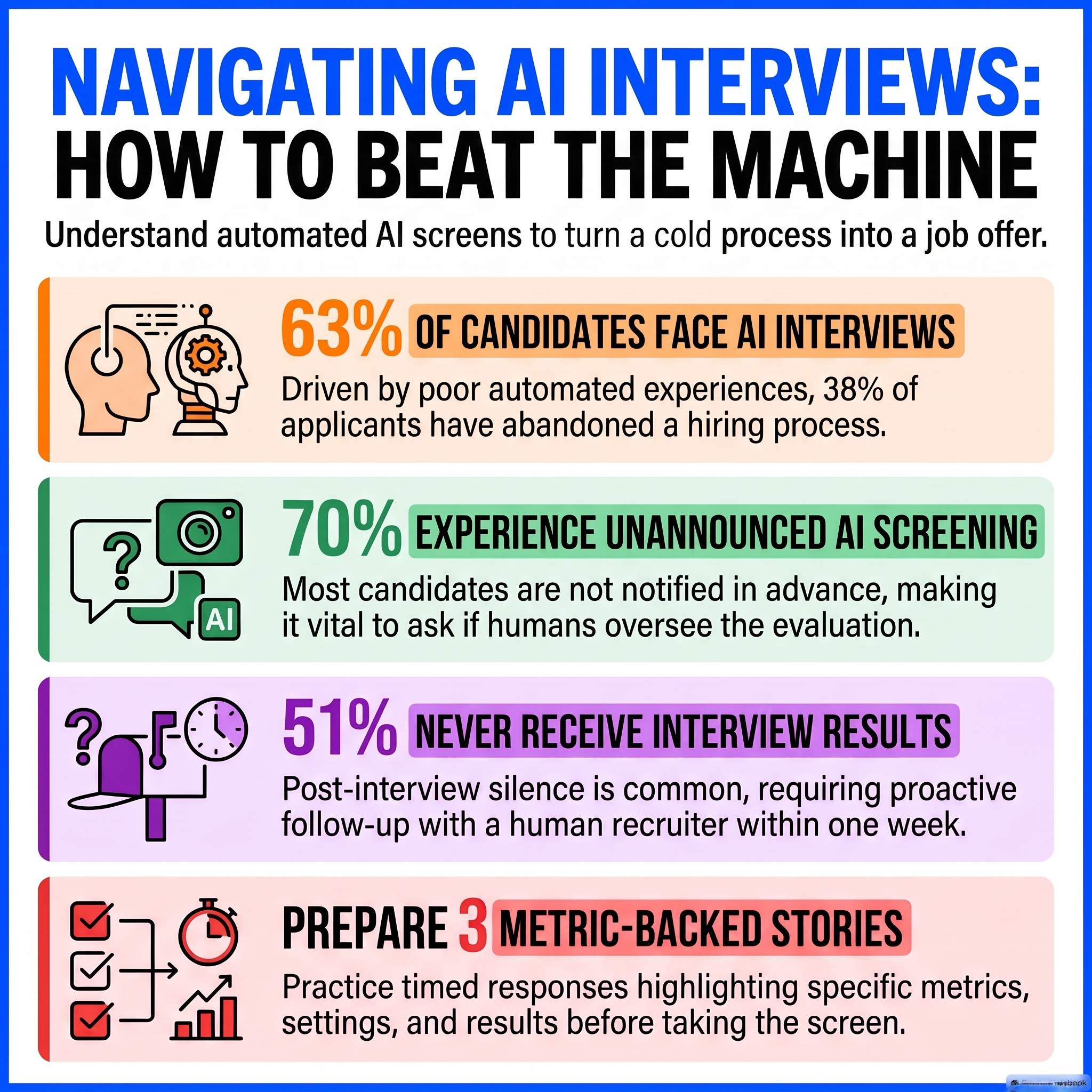
AI interviewing is now common. Greenhouse’s 2026 Candidate AI Interview Report, released May 1 and based on 2,950 job seekers in five countries, found that 63% of US candidates have been interviewed by AI.
Ribbon, a voice AI recruiting platform, says about a quarter of its interviews take place between 10 p.m. and 2 a.m. local time, based on data from roughly 500 companies.
Moneywise put the figure at 24%. Business Insider reported that the share of applicants interviewed by AI rose 13 percentage points in six months.
Candidates are pushing back. In the same Greenhouse data, 38% of US candidates abandoned a hiring process at least once because it included an AI interview, and another 12% said they would if one were required.
CNBC reported in September that some applicants now refuse AI interviews or blacklist employers that require them.
Two cautions. Ribbon is a vendor, so its number is company data, not an independent study. We also found no pharmacy or medical affairs specific figures, so treat this as a general hiring trend that can reach pharmacy and MSL applicants.
1. Candidates reject the process, not the technology
Greenhouse Chief People Officer Sharawn Tipton told Fortune that candidates are walking away from bad experiences, not from AI itself.
The data backs her up. The top reasons for withdrawing were pre-recorded interviews scored by AI with no human present (33%), no disclosure of AI use (27%), and AI monitoring (26%). Only 19% of candidates want less AI in hiring, and another 22% want more AI if humans oversee it.
Judge an employer’s process the way you would judge a pharmacy workflow. A clear, disclosed process signals an organized team.
2. Disclosure is the weak link
Greenhouse found that 70% of US candidates who faced AI evaluation were not clearly told in advance. Enhancv’s April 2026 survey of 1,066 US job seekers points the same way: only 9.7% said an employer had ever clearly told them AI was involved.
Candidates want safeguards, and 46% want the option to request a human interview instead. Another 38% want confirmation that humans review AI output before decisions.
Ask before you interview: Will AI score my answers? Will a person review the result? Can I request a live interview?
3. The late-night slot is a choice, not a requirement
Interviews no longer depend on staff hours. Ribbon’s co-founder describes the format as an option for people constrained by work, parenting, and other commitments.
Business Insider reported that the late-night share reaches 35% among Ribbon’s manufacturing customers, so the pattern varies by industry. Convenience cuts both ways, though.
A tired answer at 1 a.m. is still your answer. Book the slot when you think most clearly, test your camera and microphone first, and choose a quiet room.
4. Silence after the interview is common, so plan for it
Greenhouse found that 51% of candidates who completed an AI interview never received an outcome, and only 28% moved forward. Do not read silence as a verdict on your skills.
Log each application date, role, and contact, then follow up with a human recruiter within a week.
State your impact in specifics: setting, scale, result. Use this template with your real numbers only: Cut [error type] by [X]% across [N] prescriptions per day.
Treat the AI screen as a gate to pass, not a verdict on your clinical or scientific ability. Whether you search a pharmacy job board, compare pharmacy job search engines, or target MSL Jobs, build a short bank of metric-backed stories before the first screen arrives. Match your resume keywords to each posting.
Record every format question you ask so you can compare employers. Keep your license details, certifications, and numbers in one document so you can answer fast. Then add a human advocate. A Personal Recruitment Services partner can help you learn the format before you log in and follow up with a person when a process goes quiet.
This week, write three metric-backed stories from your current or last role and practice them aloud against a timer.
Before your next screen, ask the employer how AI will be used and who reviews the result. Those two moves give you control in a process that often gives candidates little.
Have you faced an AI interview yet? Reply and tell us what it asked and how it felt. Your experience may help a colleague prepare. Save this edition for your next application, and forward it to anyone on the job hunt.